
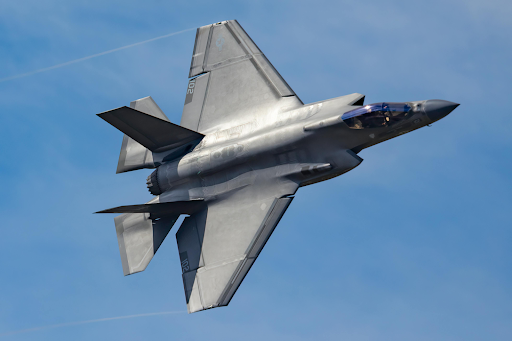
The Dutch Supreme Court is the final arbiter in a legal clash that pits human rights obligations against state authority. The court’s ruling will determine if the Netherlands must continue to block the export of F-35 fighter jet parts to Israel, a measure imposed by a lower court over concerns of complicity in war crimes.
The lawsuit, spearheaded by a trio of human rights groups, aims to hold the Dutch government accountable for its role in supplying a key component of Israel’s air power. The organizations argue that providing these parts while Israel conducts its campaign in Gaza, which has killed tens of thousands, is a direct violation of Dutch and international law. Israel, for its part, denies the allegations of war crimes.
The government’s appeal to the Supreme Court was prompted by a February 2024 ruling from an appeals panel, which ordered an immediate halt to the shipments. That court found a “clear risk” that the F-35s are involved in violations of humanitarian law. The government’s pushback centers on the principle that courts should not interfere with foreign policy.
A significant aspect of the case revolves around the logistics of the F-35 program. The parts in question are owned by the United States but stored in a Dutch facility. The government argues that this makes any Dutch ban effectively powerless, as the U.S. remains committed to supplying Israel and can bypass the Netherlands if necessary.
The context for this legal battle is the devastating war that followed the Hamas attack of October 7, 2023. The violence has prompted a wave of legal challenges and political shifts across Europe regarding military support for Israel. Slovenia has banned all weapons trade, while the U.K. and Spain have suspended certain exports, underscoring the growing international pressure.