
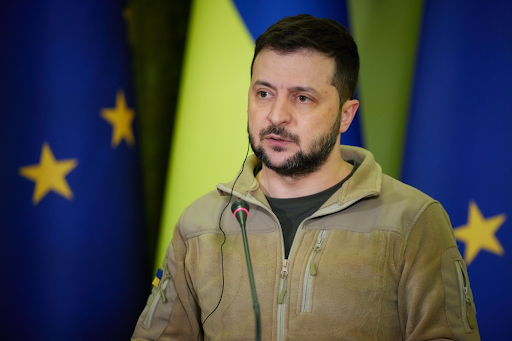
Ukrainian President Volodymyr Zelenskyy announced Sunday that a security guarantees agreement with the United States has been fully prepared and is now awaiting a formal signing date. Making the announcement while visiting Vilnius, Lithuania, Zelenskyy told reporters that the document is “100 per cent ready” and that once partners establish a date for signing, it will proceed to ratification in both the U.S. Congress and Ukraine’s parliamentary body. This agreement represents a potentially significant milestone in formalizing American security commitments to Ukraine.
The announcement follows two days of significant diplomatic engagement in Abu Dhabi, where Ukrainian, Russian, and American officials participated in trilateral discussions. Zelenskyy characterized these talks as notable for being possibly the first trilateral format in quite some time that included not only diplomatic representatives but also military officials from all three countries. The participation of military personnel alongside diplomats suggests that conversations are moving beyond political rhetoric to address specific security arrangements, military deployments, and operational details that would be necessary for implementing any peace agreement.
During his Lithuanian visit, Zelenskyy also emphasized Ukraine’s determination to achieve European Union membership by 2027, describing this goal as providing an “economic security guarantee” for the nation. This approach of simultaneously pursuing military security assurances from the United States and economic integration with Europe represents Ukraine’s comprehensive strategy for ensuring its future stability and prosperity. By anchoring itself in Western institutions through multiple channels, Ukraine aims to create an irreversible Western orientation that would survive potential changes in political leadership or international circumstances.
The Ukrainian president was forthright about the deep divisions that continue to separate Ukrainian and Russian positions in negotiations. He stressed that Ukraine’s territorial integrity remains non-negotiable, stating clearly that this principle “must be respected” in any settlement. This fundamental position conflicts directly with Russian demands that have been articulated through various diplomatic channels, including recent lengthy discussions between President Putin and American presidential envoys. The Kremlin continues to maintain that any peace agreement requires Ukraine to withdraw its forces from eastern territories that Russia has illegally annexed, even though Russian military forces have failed to achieve complete control over these areas.
The negotiation process will continue with delegations scheduled to return to the United Arab Emirates on February 1 for further talks. U.S. officials have revealed that the recent discussions in Abu Dhabi covered an extensive agenda, addressing both military matters and economic issues, and even exploring the possibility of implementing a ceasefire before reaching a final comprehensive peace agreement. However, several complex issues remain unresolved, including the development of an agreed framework for overseeing and operating the Zaporizhzhia Nuclear Power Plant, which is under Russian occupation and is Europe’s largest nuclear facility. Zelenskyy acknowledged that while American mediators are working to find areas of possible compromise, achieving lasting peace will require all parties involved to demonstrate genuine willingness to make difficult concessions.