
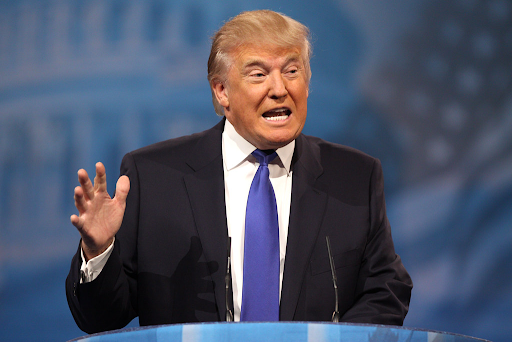
Donald Trump’s speech at the World Economic Forum marked a partial de-escalation in his pursuit of Greenland, with the president explicitly committing to peaceful methods while maintaining that American acquisition of the territory remains necessary and inevitable. His remarks reflected an attempt to balance domestic political demands for assertive foreign policy with international pressure to respect allied sovereignty and territorial integrity.
The president’s case for Greenland centered on security imperatives in an era of renewed great power competition. Trump portrayed the island as vulnerable and inadequately defended under current arrangements, arguing that Russian and Chinese activities in the Arctic necessitate stronger American control. His proposed missile defense infrastructure would require permanent military installations that, in his view, can only be maintained on sovereign American territory rather than through agreements with Denmark.
European reactions demonstrated persistent unease despite Trump’s no-force pledge. Danish Foreign Minister Lars Løkke Rasmussen characterized the situation as an ongoing “challenge” that hasn’t been resolved by ruling out military options. Norwegian officials including Jens Stoltenberg acknowledged widespread relief at Trump’s explicit rejection of invasion scenarios, indicating how seriously European governments had taken the possibility of armed conflict over Greenland—a NATO member’s territory.
Trump’s tariff reversal appeared strategically timed to claim diplomatic victory while avoiding economic confrontation. By announcing a supposed framework agreement with NATO leadership, the president could postpone punitive measures against eight European countries while maintaining that progress toward his Greenland objectives continues. The vague nature of this purported deal, with NATO’s Rutte declining comment and no involvement confirmed by Greenland or Denmark, suggested the “agreement” may be more rhetorical than substantive.
Beyond Greenland, Trump’s address featured attacks on European energy policy, defense spending, and immigration alongside boasts about American economic achievements. He criticized renewable energy, praised fossil fuels, questioned mutual defense commitments, and deployed nationalist rhetoric about Western civilization. The 80-minute speech drew mixed reactions, with some Republican senators expressing concern about ignoring Greenlandic wishes while Democratic critics dismissed it as meaningless bluster.