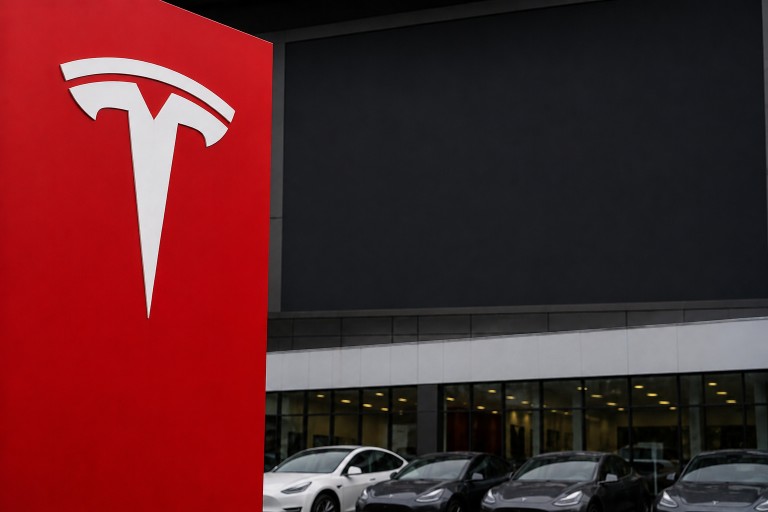
Tesla’s second-quarter financial results fell short of Wall Street’s expectations, as the company’s profit figures did not meet analysts’ predictions, despite surpassing revenue forecasts. Following the announcement, Tesla shares experienced a decline of over 3% in after-hours trading. The electric vehicle giant reported earnings of 31 cents per share, while analysts had anticipated 51 cents per share. However, the company’s revenue hit $28.23 billion, exceeding the expected $25.71 billion.
This year, Tesla’s stock has seen a decrease of approximately 14%, influenced by growing competition from more affordable Chinese electric vehicle makers and the effects of the expiration of U.S. electric vehicle tax incentives. Despite the ongoing importance of vehicle sales, Tesla is increasingly shifting its focus towards innovation in artificial intelligence, robotics, autonomous driving, and its burgeoning Robotaxi service. CEO Elon Musk emphasized that the Optimus humanoid robot could potentially become Tesla’s most significant product in the future, although he acknowledged the substantial technical and manufacturing hurdles that need to be addressed before mass production is feasible.
The company is expanding its Robotaxi service, recently adding Tampa and Orlando to its operational areas. The autonomous ride-hailing service is already available in selected areas of Austin, Dallas, Houston, and Miami. Musk highlighted that the rollout of the Robotaxi service is proceeding cautiously, with safety being a top priority to prevent incidents that might attract regulatory attention. Currently, around 50 Robotaxis are in operation in Austin, where the service was initially launched.