
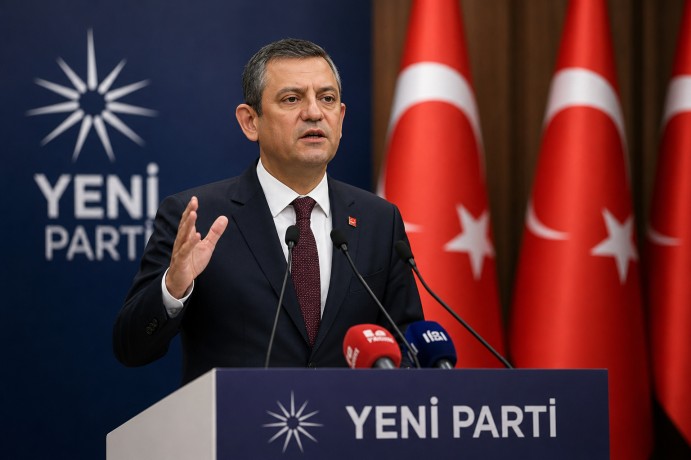
In a dramatic transformation of Türkiye’s political sphere, former Republican People’s Party (CHP) leader Özgür Özel, along with 91 lawmakers, has parted ways with the CHP to form a new political entity known as the New Party (Yeni Parti). This mass exodus represents the most significant division within the CHP in recent memory and reshapes the political dynamics in the Turkish Parliament. By joining the New Party, these lawmakers have created the largest opposition bloc, drastically reducing the CHP’s seats from 135 to just 44 and ending its long-standing role as the principal opposition party in the country.
The formal inception of the New Party was marked on Friday when Özel signed its founding documents, which were subsequently submitted to the Interior Ministry for official registration. All 91 former CHP members have become part of the new party’s founding board. During a press briefing in Ankara, Özel announced that the party had finalized its legal registration and emphasized that the immediate focus would be on establishing its leadership structure. The founding board plans to gather at the historic Anadolu Club, a venue with ties to Mustafa Kemal Atatürk, to select the party’s chairperson and other governing bodies.
Özel expressed his vision for the New Party as they prepare to engage in the upcoming parliamentary budget discussions, emphasizing that this would be their debut and final appearance as the main opposition in this context. He conveyed optimism that the new movement would soon lead a government aimed at achieving economic growth and political steadiness. This shift in parliamentary representation is expected to alter seating arrangements in the General Assembly and increase the number of parliamentary groups from six to seven.
This significant political realignment follows a period of internal discord within the CHP, which was further complicated when Kemal Kılıçdaroğlu reclaimed leadership after a court invalidated the previous party congress. CHP spokesperson Müslim Sarı raised questions about the need for a new party, pointing out that Özel has committed to the same political doctrines as the CHP. Sarı suggested that the establishment of the New Party might be driven more by strategic positioning rather than substantive policy disagreements.
As the New Party emerges, it is poised to redefine opposition politics in Türkiye, setting the stage for fresh legislative debates and future electoral contests. The political landscape in Türkiye is on the cusp of significant change, with the New Party potentially playing a pivotal role in shaping the country’s political future.