
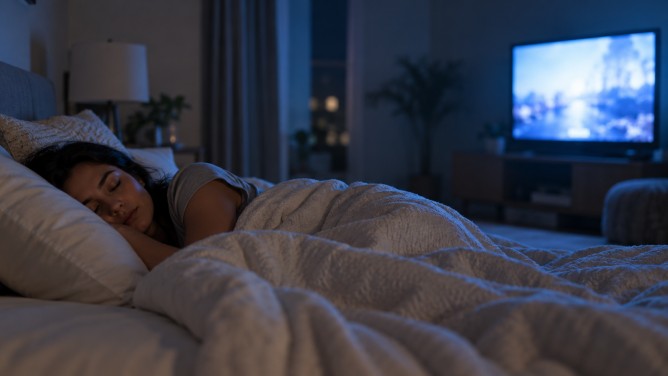
Exposure to artificial light at night, such as falling asleep with the television on, may have implications for heart health, according to recent research. The study highlights how nighttime light can lead to measurable differences in heart structure and function, emphasizing the importance of maintaining a dark, restful sleep environment.
The body’s circadian rhythm, an internal 24-hour clock, regulates sleep, hormone release, and other essential functions. Darkness signals the body to rest, but artificial light at night can disrupt these natural processes. Researchers analyzed data from over 11,000 adults using wrist devices to measure light exposure. Approximately three years later, participants underwent heart scans to assess heart structure and function.
Findings indicated that individuals exposed to higher levels of light at night exhibited significant differences in heart characteristics, such as greater left ventricular mass, thicker heart walls, and decreased heart muscle contraction ability. These changes align with a condition known as concentric cardiac remodeling, though the study does not establish a direct causation between nighttime light exposure and heart disease. The research considered various light sources, not just televisions, including bedroom lamps and streetlights.
One explanation for these heart changes involves sleep disruption. The body’s internal clock coordinates processes like sleep timing and hormone release, and light exposure at inappropriate times can interfere with this rhythm, making restful sleep more challenging. The study found that shorter sleep duration partially explained the link between nighttime light exposure and heart structure changes, suggesting sleep disruption as a contributing factor.
Maintaining a dark sleeping environment is a simple yet effective way to support better sleep. While occasional exposure to nighttime light is not a direct heart risk, consistently sleeping in a brightly lit environment may disrupt healthy sleep patterns. To create a sleep-friendly bedroom, consider using a TV sleep timer, turning off unnecessary lights, blocking outdoor light with curtains or blinds, reducing screen use before bed, and maintaining a regular sleep schedule.
These habits can contribute to better rest and overall heart health. However, if you have concerns about your heart health, it is advisable to discuss potential risk factors with a healthcare professional, rather than relying solely on changes in sleep habits.