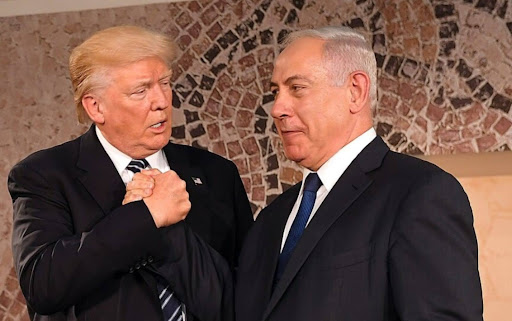
Not all assessments of the Trump-Netanyahu campaign against Iran need to be framed in terms of its tensions and failures. The alliance has also demonstrated remarkable effectiveness in many respects — successfully degrading Iranian capabilities, conducting complex operations across a wide geographic area, and managing its internal tensions without fracture. A balanced assessment requires acknowledging both what the Trump-Netanyahu partnership does well and where it struggles.
Where the alliance works: intelligence sharing at unprecedented depth provides targeting quality that neither country could achieve independently. Combined military capabilities — American strategic assets and Israeli precision reach — create an operational synergy that has proven highly effective against Iranian nuclear and military infrastructure. The personal relationship between Trump and Netanyahu facilitates direct communication that reduces the formal overhead of managing disagreements. The shared assessment of Iran as a threat provides a genuine strategic foundation.
Where the alliance struggles: managing independent Israeli action that exceeds American endorsed parameters — as South Pars demonstrated — creates diplomatic costs that accumulate. Different ultimate objectives generate friction at every level of strategic planning and operational execution. Communication management under pressure — the “knew nothing” post, the subsequent contradictions — imposes credibility costs that take time to repair. Gulf ally management becomes harder when Netanyahu’s escalations impose regional costs without Trump’s endorsement.
The balanced assessment points toward an alliance that is more effective than the South Pars episode alone suggests, and more strained than its official narrative acknowledges. Director of National Intelligence Gabbard’s testimony about different objectives between Trump and Netanyahu belongs in the “struggles” column — it is an honest assessment of a real difficulty. But so does the alliance’s demonstrated ability to conduct a major military campaign against a significant regional power without fracturing.
The path forward lies in building on what works — the intelligence partnership, the operational synergy, the personal relationship between Trump and Netanyahu — while honestly addressing what doesn’t — the objective divergence, the escalation ambiguity, the communication inconsistencies. South Pars is a data point, not a verdict.